


Elegear Sleep Guide
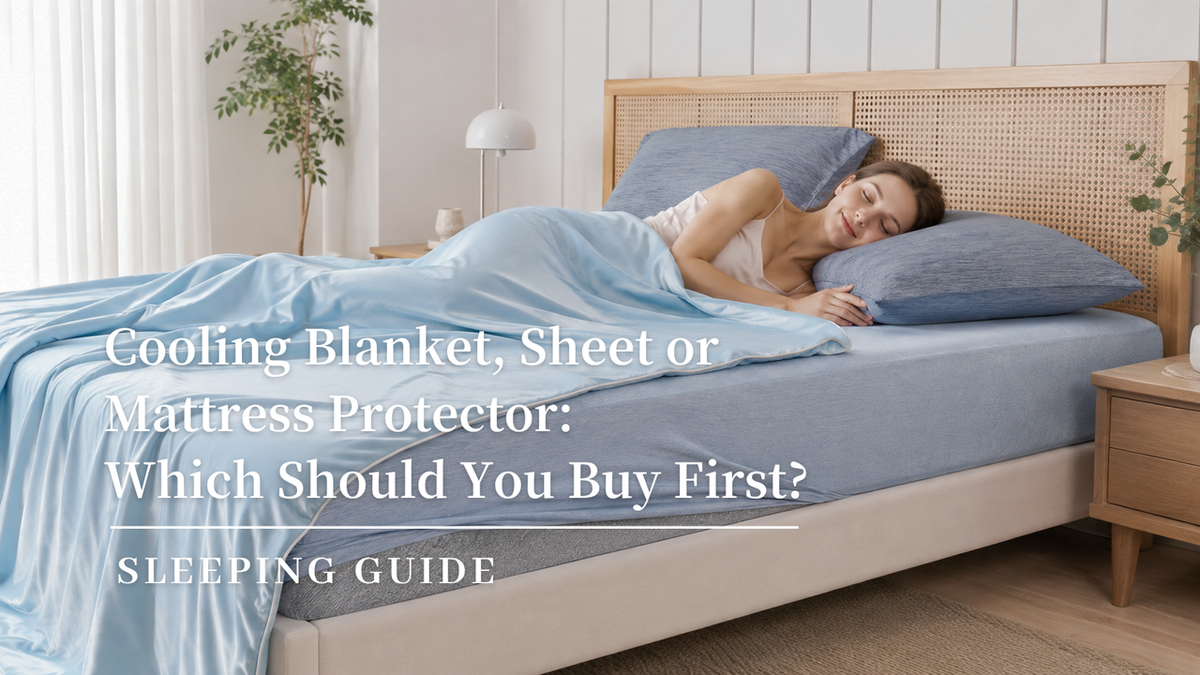
Cooling Blanket, Sheet or Mattress Protector: Which Should You Buy First?
Cooling blankets, sheets and mattress protectors work on different parts of the sleep environment. This practical guide helps you identify where nighttime heat is coming from—and choose the cooling layer most likely to make a difference.

Cooling bedding is no longer limited to one type of product. Today, hot sleepers can choose from cooling blankets, cooling sheets, mattress protectors, pillowcases and complete temperature-regulating sleep systems.
More choice can be helpful—but it can also make the first purchase surprisingly difficult.
Should you replace the blanket covering your body? Start with the sheet touching your skin? Or add a cooling layer over a heat-trapping mattress?
The answer depends less on which product sounds the coolest and more on one practical question: Where do you feel the heat first?
A cooling blanket, cooling sheet and cooling mattress protector each interact with a different part of your sleep environment. Understanding those differences can help you address the most likely source of discomfort instead of replacing every layer at once.
Start With a 30-Second Heat Check
Think about the last time you woke up feeling too warm. Where was the discomfort most noticeable?
- Was the blanket over your chest and legs feeling heavy or stuffy?
- Did your back and waist feel trapped against a warm mattress?
- Did the sheet feel damp or cling to your skin?
- Was your pillow area warmer than the rest of the bed?

Your answer provides the first clue.
This does not mean one product can only help one area. Bedding layers work together. However, beginning with the layer closest to the problem usually makes the decision easier.
1. Choose a Cooling Blanket When the Heat Comes From Above
A cooling blanket or comforter is the most relevant first choice when your existing cover feels heavy, stuffy or unnecessarily warm.
Traditional comforters can hold a substantial amount of warm air around the body, particularly when they contain dense filling or use fabrics that do not release heat and moisture efficiently. Even when the bedroom itself is comfortable, the space beneath the blanket can become its own warm microclimate.
A cooling blanket is designed to make that upper layer feel lighter and more comfortable. Depending on its materials and construction, it may offer:
- A cool-to-the-touch surface
- Lighter coverage than a traditional comforter
- Faster heat transfer away from the skin
- Improved moisture movement
- Less of the enclosed, stuffy feeling associated with heavy bedding

A cooling blanket may be your best first purchase if:
- You regularly push your comforter away during the night.
- Your chest and legs feel hot, but your back does not.
- You want the comforting sensation of being covered without excessive warmth.
- Your current comforter is thick, dense or designed for colder seasons.
- You become uncomfortable soon after pulling the blanket over yourself.
What a cooling blanket may not fix
If most of the heat is building beneath your back, replacing the top blanket may only solve part of the problem. Heat can still accumulate between your body, sheet and mattress—especially if the mattress closely contours around you.
A cooling blanket also cannot actively lower the temperature of a hot bedroom. It can help manage heat around the body, but it is not a replacement for ventilation, a fan or air conditioning in extreme conditions.
2. Choose Cooling Sheets When Heat and Sweat Build Up at Skin Level
Sheets are the layer that remains in direct contact with much of your body throughout the night. That makes them especially important for sleepers who feel sticky, damp or uncomfortable after sweating.
However, “cooling” and “breathable” do not always mean exactly the same thing.
Some sheets primarily allow more air to move through the fabric. Others are designed to move moisture away from the skin. Performance cooling fabrics may also create a more noticeable cool-to-the-touch sensation.
For sleepers who perspire at night, moisture management matters alongside initial coolness. A sheet that feels cold in the first few seconds may still become uncomfortable if sweat remains concentrated against the skin.
Cooling sheets may be the best place to start if:
- You wake up with damp or clammy bedding.
- Your skin sticks to the sheet during warm nights.
- You want cooling contact across most of the body.
- Your current sheets feel dense, fuzzy or slow to dry.
- You are comfortable with your blanket but dislike the sleeping surface beneath you.
Cooling sheets can also be a relatively simple way to refresh the bed without changing the feel or support of the mattress.
What cooling sheets may not fix
Sheets are thin by design. If the mattress beneath them stores significant heat, a sheet alone may not fully isolate your body from that warmth.
They also cannot stop sweating caused by hormonal changes, medication, illness or other factors. They can help make the sleep surface feel drier and more comfortable, but they do not treat the underlying cause of night sweats.
3. Choose a Cooling Mattress Protector When Your Back Sleeps Hot
If the hottest area is underneath you rather than above you, begin by examining the mattress layers.
Memory foam and other body-contouring materials can reduce the amount of air circulating around the back, waist and hips. Thick mattress toppers and non-breathable waterproof protectors may add additional barriers that slow the release of heat and moisture.
A cooling mattress cover creates a functional layer between the sleeper and the mattress. Depending on its design, it may help provide:
- A cooler initial contact surface
- Better heat distribution across the bed
- Improved moisture management
- A more breathable barrier over the mattress
- Protection against sweat, spills and everyday wear

A cooling mattress protector may be your best first purchase if:
- Your back or waist becomes hotter than your chest and legs.
- Your mattress feels noticeably warm after you get out of bed.
- You sleep on contouring memory foam.
- You already like your sheets and comforter.
- You need both mattress protection and a cooler sleep surface.
- Your existing protector feels plastic-like, stiff or uncomfortably warm.
What a cooling mattress protector may not fix
A protector cannot completely change the internal construction of a deeply heat-retaining mattress. If the mattress surrounds the body or has very limited airflow, an additional surface layer may improve comfort without eliminating all heat buildup.
The protector must also remain compatible with the mattress depth and fitted sheet. An overly loose or tight fit may create wrinkles, shifting or reduced comfort.
4. What If You Feel Hot Everywhere?
If your back, chest, legs, head and the surrounding room all feel warm, replacing a single layer may not be enough.

This is the point where it helps to think of the bed as a system:
- Room: Temperature, humidity and airflow determine where released heat can go.
- Mattress: The structure beneath the body affects airflow and heat retention.
- Protector: This can add breathability—or become another heat-trapping barrier.
- Sheet: This manages direct skin contact and moisture.
- Blanket: This controls how much warmth remains above the body.
- Sleepwear: Heavy or slow-drying pajamas can work against cooling bedding.
In a hot, humid room, perspiration may evaporate more slowly. Even highly breathable bedding will perform differently when the surrounding air is already holding substantial heat and moisture.
Try improving the environment before replacing every product. Increase airflow, remove unnecessary bedding layers and check whether the current mattress protector is contributing to the problem.
The “One Layer First” Decision Guide
Use this quick guide if you are still unsure where to begin.

Your main complaint is, “I want to be covered, but every blanket feels too warm.”
Your main complaint is, “I wake up sweaty, and the fabric touching my skin feels damp or sticky.”
Your main complaint is, “My back feels hot, and the mattress seems to hold onto body heat.”
Your main complaint is, “The whole bed becomes hot, no matter what I remove.”
A practical sequence is to change one layer, use it for several nights under similar room conditions and observe what changes. Replacing everything at once may make it harder to identify which layer was causing the discomfort.
Avoid These Common Buying Mistakes
There is no single cooling product that is automatically best for every hot sleeper. The best first purchase is therefore not necessarily the product with the strongest cooling claim. It is the layer that addresses where you actually experience heat.
Choosing only by the word “cooling”
“Cooling” can refer to contact coolness, breathability, moisture movement or active temperature control. Look for an explanation of how the product works.
Assuming a higher cooling number means the bed stays colder all night
Contact-cooling measurements typically describe how quickly heat moves away at the moment of contact. They do not mean the bedding continually produces cold air or lowers room temperature.
Ignoring the filling and construction
A cool surface fabric can still be paired with thick filling that holds warmth. Consider the complete product, not only the outer fabric.
Adding too many layers
Placing a cooling product beneath a thick, non-breathable layer may limit its effect. Every additional mattress pad, waterproof cover, sheet and blanket changes the overall system.
Forgetting care instructions
High heat, bleach, fabric softener or unsuitable washing methods may affect the appearance, texture or functional performance of some cooling materials. Always follow the product-specific care label.
About Elegear
Pioneering the use of advanced textile science, Elegear is a premium home textile brand committed to designing high-quality, comfortable, and highly functional sleep and lifestyle products. By blending natural materials with cutting-edge technology, we strive to meet the varied needs and preferences of global consumers seeking better sleep and everyday comfort. In addition to the strong recommendation from Coffee with America, our continued recognition from Good Housekeeping Bedding Awards validates our core promise: deliver genuine, sustained cooling comfort through advanced, science-driven textile innovation—night after night.
Cooling bedding supports sleep comfort but does not actively refrigerate the bed or treat medical causes of night sweats. Individual experiences may vary depending on room temperature, humidity, sleepwear, mattress construction and personal sleeping habits.
Tonight, before changing your bedding, pay attention to where the discomfort begins. Your body may already be telling you which layer to fix first.
Follow us: Instagram | Pinterest | TikTok
Media Contact: press@elegear.com


एक टिप्पणी छोड़ें
यह साइट hCaptcha से सुरक्षित है और hCaptcha से जुड़ी गोपनीयता नीति और सेवा की शर्तें लागू होती हैं.